The Ultimate Guide to Preparing Weatherboards for Painting in Wellington’s Climate (2025)
Weatherboards are iconic across Wellington—from heritage villas to 1950s bungalows and coastal homes. But they also endure some of New Zealand’s toughest weather conditions: salty air, high winds, intense UV, sudden rain shifts and year-round moisture.
Because of this, proper weatherboard preparation is the most important step in achieving a long-lasting, beautiful paint finish.
This guide walks you through exactly how professionals prepare weatherboards for painting—using a Wellington-specific approach to ensure durability and premium results.
1. Start With a Full Inspection of the Weatherboards
Before any sanding or priming begins, inspect your cladding for:
- peeling or bubbling paint
- hairline cracks
- soft or rotten timber
- mould or mildew
- loose boards or nails
- gaps in joints and trims
Wellington’s wet winters can cause hidden damage, especially on south-facing walls. Any issues must be repaired before painting.
2. Wash the Weatherboards Thoroughly
Weatherboards must be completely clean so paint can adhere properly.
A soft wash removes:
- Wellington salt deposits
- dirt, dust and pollutants carried by wind
- mould and algae
- cobwebs and debris
A professional soft wash is recommended—high-pressure washing can force water behind cladding.
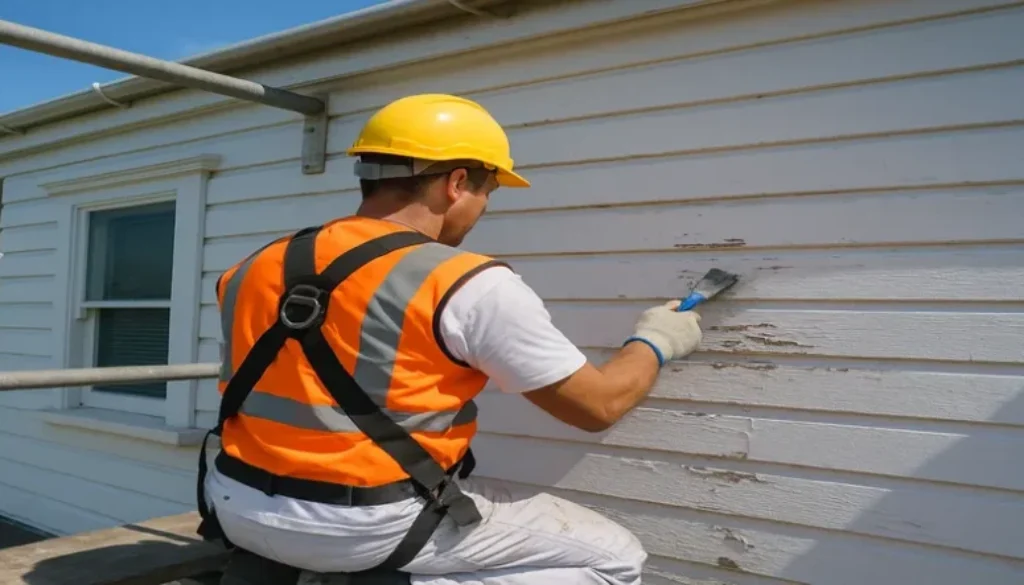
3. Scrape Off Flaking or Loose Paint
Any failing paint must be removed.
Use:
- a quality paint scraper
- heat gun for stubborn patches
- sanding block or electric sander
Scrape back to a stable edge. Painting over loose paint will cause immediate future peeling.
4. Sand the Boards Smooth
Sanding creates a smooth, even surface and helps primer bond properly.
Professionals typically use:
- 60–80 grit for heavy paint removal
- 120 grit for smoothing
- 180+ grit for finishing before priming
Always sand in the direction of the weatherboard grain.
Wellington wind carries dust, so sanding must be done on dry, calm days.
5. Repair Weatherboard Damage
Any damaged timber, gaps or cracks need fixing before priming.
Common repairs include:
- filling cracks or holes with exterior-grade filler
- replacing rotten boards
- re-nailing loose boards
- sealing gaps with flexible exterior sealant
- replacing damaged putty around windows
Skipping this step shortens paint life—Wellington moisture easily gets into untreated gaps.
6. Treat Mould & Mildew Properly
Mould grows quickly in Wellington’s humid zones.
Use:
- a fungicidal treatment
- bleach solution (professionally applied)
If mould isn’t treated deeply, it will come back through new paint.
7. Apply the Right Primer
Primer is essential for weatherboards—especially in Wellington’s climate.
Primer helps with:
- sealing the timber surface
- ensuring even topcoat absorption
- preventing moisture entry
- maximising paint adhesion
Bare timber must be primed within 24 hours in summer or it may absorb moisture.
Choose a premium exterior primer designed for:
- UV exposure
- high wind zones
- coastal salt
8. Sand Again After Priming
A light sand ensures the topcoat goes on smoothly.
Use fine sandpaper (180–240 grit) and wipe down dust.
This step separates amateur work from professional-grade finishes.
9. Check Weather Conditions Before Painting
Even in summer, Wellington weather can change suddenly.
Only paint when:
- temperatures are between 10°C–30°C
- humidity is low
- no strong southerlies are forecast
- rain is not expected for 24 hours
Good conditions give your paint the longest possible lifespan.
10. Choose a Durable, Wellington-Proof Paint System
Not all exterior paints are equal.
Wellington’s climate requires:
- UV-resistant topcoats
- flexible paint membranes
- mould-resistant additives
- premium acrylic exterior paints
Cheaper paint systems break down fast in Wellington conditions.
Why Proper Preparation Matters More in Wellington
Poor prep = poor durability.
Wellington wind, moisture and UV will quickly expose shortcuts. Proper weatherboard preparation ensures:
- smoother finish
- stronger adhesion
- longer paint lifespan
- resistance to Wellington’s salt and wind
- better protection for your home’s structure
This is the difference between a paint job that lasts 3–5 years and one that lasts 10+ years.
Ready to Refresh Your Weatherboards This Summer?
AAA Painters specialises in:
- full weatherboard preparation
- weatherboard repairs
- priming & sealing
- premium exterior painting
- Wellington climate-specific systems