How Wellington’s Wind, Rain and Salt Air Affect Your Home’s Paint
Painting a home in Wellington is not the same as painting a home in a mild, sheltered climate. The city’s wind, rain, salt air and UV exposure all affect how exterior paint ages.
A paint system that performs well in one location may struggle in another if the preparation, primer and topcoats are not selected for the conditions. This is especially important for exposed hill suburbs, coastal properties, older weatherboard homes and houses with complex rooflines or drainage issues.
This guide explains how Wellington’s climate affects exterior paint and what homeowners can do to protect their homes for longer.
Quick Answer: Why Wellington Weather Matters
Wellington weather can shorten paint lifespan by increasing surface contamination, moisture exposure, UV breakdown and physical stress on cladding and sealants. The best protection is proper preparation, high-quality exterior coatings, attention to joins and edges, and regular maintenance after painting.
1. Wind-Driven Rain Can Find Weak Points
Wellington’s wind can push rain against exterior walls, window trims, fascia, weatherboards and roofline details. Where small cracks or failed sealants exist, moisture may get behind the coating or into the substrate.
Paint failure is often blamed on the topcoat, but the real issue can be moisture movement behind the surface. Once moisture is trapped, paint may bubble, blister, flake or lose adhesion.
What homeowners should watch for
- Bubbling paint near windows or trims
- Peeling paint on one side of the house
- Dark staining around joins
- Soft or swollen timber
- Repeated mould in the same area
- Cracked or missing sealant
2. Salt Air Can Leave Contaminants on the Surface
Homes closer to the coast can accumulate salt and airborne contaminants on exterior surfaces. These deposits are not always obvious, but they can affect paint adhesion and long-term performance.
This is one reason washing is so important before painting. A house may look clean from a distance, but contaminants can still be sitting on the surface.
Why this matters before painting
Painting over salt, dust, mould or chalking can reduce adhesion. A professional exterior repaint should start with proper cleaning so the new system bonds to a sound surface.
3. UV Exposure Breaks Down Paint Over Time
Sun exposure gradually breaks down exterior paint. Over time, colour can fade, gloss can reduce and the surface may develop chalking. Chalking is the powdery residue that appears when the paint binder starts to break down.
North and west-facing elevations often age first because they receive stronger sun exposure. Dark colours can also absorb more heat, which may increase stress on certain surfaces.
4. Moisture and Shade Encourage Mould and Mildew
Not every paint problem is caused by sun. Shaded, damp or poorly ventilated areas can develop mould and mildew faster than exposed dry areas.
This is common around south-facing walls, retaining walls, dense planting, decks, shaded paths and areas with poor drainage. Paint can only perform properly when the surrounding conditions allow the surface to dry.
5. Temperature and Surface Movement Stress Sealants
Timber, plaster, fibre cement and other materials expand and contract with temperature and moisture changes. Over time, this movement can split caulking, open joins and expose edges.
For weatherboard homes, flexible sealants and careful priming are essential around vulnerable areas. If joins are left open, moisture can enter and undermine the paint system from behind.
Wellington Paint Risk Areas by Home Type
| Home or surface type | Common risk | What good preparation should include |
| Weatherboard homes | Timber movement, peeling, open joins | Washing, scraping, sanding, spot priming, gap sealing and timber repairs where needed. |
| Plaster homes | Hairline cracks and moisture entry | Crack inspection, sealant checks, compatible primers and suitable exterior coatings. |
| Coastal homes | Salt contamination and faster weathering | Thorough washing, premium coatings and ongoing maintenance washing. |
| Hilltop or exposed homes | Wind-driven rain and UV exposure | Close inspection of weather-facing elevations and high-quality exterior systems. |
| Shaded homes | Mould, mildew and damp surface conditions | Cleaning, mould treatment and improved drying where possible. |
Why Preparation Is More Important in Wellington
In a demanding climate, paint performance depends heavily on the surface underneath. A rushed repaint may look fine for a short time, but problems can appear quickly if old paint, contaminants, moisture or failed sealants are not properly addressed.
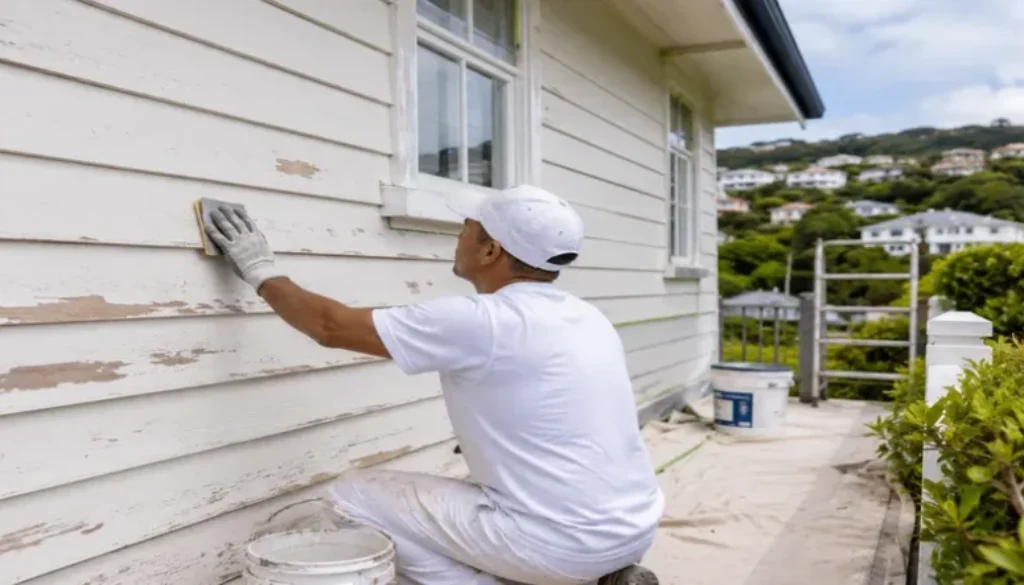
Good preparation may include washing, mould treatment, scraping, sanding, filling, priming, sealing, caulking and checking whether any underlying moisture issue needs to be fixed before painting.
How Homeowners Can Protect Exterior Paint
- Wash exterior surfaces regularly, especially in coastal or exposed locations.
- Keep gutters and downpipes clear so water is directed away from the home.
- Trim vegetation away from walls to improve airflow and drying.
- Check sealants around windows, doors and trims each year.
- Address peeling or bubbling early before the issue spreads.
- Use high-quality paint systems designed for exterior conditions.
- Choose colours and finishes with long-term exposure in mind.
When Painting Alone Will Not Solve the Problem
Paint is protective, but it is not a repair for every issue. If there is active moisture ingress, rot, failed flashings, leaking gutters or ongoing condensation, repainting without fixing the cause may only hide the problem temporarily.
A professional painter should identify obvious concerns and advise when a builder, roofer or moisture specialist may need to inspect before painting proceeds.
Final Thoughts
Wellington’s weather is one of the main reasons exterior painting should be treated as building maintenance, not just decoration.
Wind, rain, salt air, UV exposure and moisture all influence how long paint lasts and how carefully the surface needs to be prepared.
AAA Painters understands the conditions Wellington homes face and can recommend a paint system that suits the property, surface and exposure.
Frequently Asked Questions
Does Wellington weather make exterior paint fail faster?
It can, especially on exposed, coastal or poorly maintained homes. Wind, rain, salt air and UV exposure all increase stress on exterior paint systems.
Is salt air bad for house paint?
Salt deposits can affect painted surfaces over time and may reduce adhesion if not properly washed before repainting.
Why does one side of my house look worse than the others?
Different elevations receive different levels of sun, wind and rain. North, west and weather-facing sides often age faster.
Can mould be painted over?
No. Mould should be treated and cleaned before painting. Painting over mould usually leads to the problem returning.
How often should I wash my painted exterior?
A regular maintenance wash is recommended, especially in coastal, shaded or exposed locations. The timing depends on how quickly contaminants build up.